
Reserve Bank on Thursday retained the growth and inflation projection at 7.2 per cent and 4.5 per cent respectively for the current fiscal amid expectations of a normal monsoon. In its last bi-monthly monetary policy review in June, RBI had projected real GDP growth and retail inflation at the same.

A rise in petrol and diesel consumption can help the government cut cesses on the fuels by Rs 4.5 a litre without impacting revenue collections of FY21, and help cool off the pressure on inflation, domestic rating agency ICRA said on Friday. Petrol consumption is estimated to increase 14 per cent in 2021-22 and diesel by 10 per cent on the lower base, rise in mobility and economic recovery, ICRA said. The rating agency added that it will result in an additional Rs 40,000 crore in revenue for the government through higher collections of the cess.

In Amman, Biden will meet with King Abdullah of Jordan, Egyptian President Abdel Fattah El-Sisi, and Palestinian Authority President Mahmoud Abbas.

India is likely to grow by 7.5 per cent in the first quarter of the current financial year, driven by rising aggregate demand and non-food spending in the rural economy, according to an article in the RBI's May Bulletin released on Tuesday. The Indian economy has demonstrated marked resilience in the face of geopolitical headwinds impacting the supply chain, said an article on the state of the economy published in the May Bulletin.

"My aim is to make Maharashtra the world's big financial powerhouse and to make Mumbai a global fintech capital," he said.

'A mule operates someone else's account to transfer illegal money.'

The size of Reserve Bank's balance sheet increased by 11.08 per cent to Rs 70.47 lakh crore as on March 2024, leading to the highest-ever dividend payout to the government, according to the central bank's annual report. In actual terms, the increase was Rs 7,02,946.97 crore over Rs 63.45 lakh crore as on March 2023.

'Any finality in such matters requires political views. We will review it closer to the full Budget.'

Wholesale inflation rate declined marginally to 0.2 per cent in February compared to 0.27 per cent in the preceding month despite a slight uptick in the food basket. The Wholesale Price Index (WPI)-based inflation was in the negative zone from April to October and had turned positive in November at 0.26 per cent. The inflation in February 2023 was 3.85 per cent.

The 13,000-strong UNRWA staff in Gaza includes teachers, doctors, nurses, pharmacists, warehouse workers, logisticians, technicians and drivers.
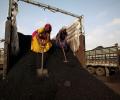
Coal India looks set to achieve its 2024-25 (FY25) production targets. If it can achieve its aim of ramping up Fuel Supply Agreement (FSA) and e-auction volumes, along with cost-saving, evacuation and infrastructure-improvement projects, the company could maintain its momentum as a critical infrastructure and core industry performer. Analysts estimate e-auction volumes of 108 million tonnes (MT) in FY25 and 120 MT for FY26, which is encouraging given the premium of e-auction prices which are consistently over 50 per cent higher than FSA.

The Reserve Bank of India's (RBI's) state of the economy report observed that any durable alignment of headline retail inflation with the target of 4 per cent could recommence in the second half of FY25 and sustain until numbers closer to the target are seen during the course of FY26, dashing hopes of any reduction in the policy repo rate in the current financial year. The report, authored by RBI staffers, including Deputy Governor in charge of monetary policy Michael Patra, said though headline numbers may fall in July and August due to base effect, it is likely to reverse in September.

Retail inflation declined to a three-month low of 5.1 per cent in January, mainly due to subdued prices of vegetables, fruits and other food items, according to government data released on Monday. The fall indicates that retail inflation is inching towards the Reserve Bank's comfort level of 4 per cent. The Consumer Price Index (CPI) based inflation was on the rise for two straight months after touching a trough of 4.9 per cent in October 2023. In December, it stood at 5.69 per cent.

About 2,000 petrol pumps, mostly in western and northern India, have run out of fuel stocks as the strike by some truckers' associations entered the second day on Tuesday.

Aviation turbine fuel accounts for 35-40 per cent of the total operating cost of an Indian airline.

'I think some of us, like Mukesh Ambani, myself and those of us who head industrial units, ought to really focus on what we can really do to make the world a safer place, maybe 50 or 100 years from now.' 'For instance, how can we deal with climate change and global warming, right now?' 'The effects of it may not be felt now; in fact, we may pay a price for it today, but it will help the generations to follow.'

The interchange fee -- paid by the card-issuing bank when a customer swipes at another bank's ATM, including at white-label ATMs -- may be raised to Rs 20 to Rs 23.
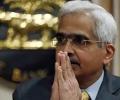
Reserve Bank Governor Shaktikanta Das on Friday stressed that the monetary policy must remain actively disinflationary to ensure that the decline in inflation from its peak of 7.44 per cent in July continues smoothly. Addressing the Kautilya Economic Conclave 2023, he also said price stability and financial stability complement each other and it has been an endeavour at RBI to manage both efficiently. Retail inflation declined to a three-month low of 5.02 per cent annually in September on account of moderation in vegetables and fuel prices, and was back within the Reserve Bank's comfort level.

The wholesale price index (WPI)-based inflation eased in January to 0.27 per cent, mainly due to moderation in prices of food items. WPI inflation was at 0.73 per cent in December 2023. The WPI inflation was in the negative zone from April to October and had turned positive in November at 0.39 per cent.
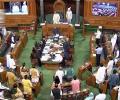
Both Houses met for the first time in the second part of Budget Session and saw repeated adjournments as the Opposition continued protests.
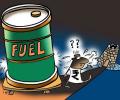
The wholesale price-based inflation accelerated to a record high of 12.94 per cent in May, on rising prices of crude oil and manufactured goods. Low base effect also contributed to the spike in WPI inflation in May 2021. In May 2020, WPI inflation was at (-) 3.37 per cent. This is the fifth straight month of uptick seen in the wholesale price index (WPI)-based inflation. In April, 2021, WPI inflation hit double digit at 10.49 per cent. "The annual rate of inflation, based on monthly WPI, was 12.94 per cent for the month of May, 2021 (over May, 2020) as compared to (-) 3.37 per cent in May 2020.

'Pump prices of petrol and diesel have reached historical highs. An unwinding of taxes on petroleum products by both the Centre and the states could ease the cost-push pressures,' the Monetary Policy Committee (MPC) has said.

Retail inflation declined to 6.83 per cent in August after touching a 15-month high of 7.44 per cent in July, mainly due to softening prices of vegetables, but still remains above the Reserve Bank's comfort zone. The overall inflation in the food basket stood at 9.94 per cent in August as against 11.51 per cent in July, according to data released by the National Statistical Office (NSO) on Tuesday. Retail inflation based on the Consumer Price Index (CPI) was at 7 per cent in August 2022.

Deloitte India on Friday said it estimates India's GDP growth at 6.6 per cent in the current fiscal helped by consumption expenditure, exports rebound and capital flows. In its India's economic outlook report, Deloitte said the rapid growth of the middle-income class has led to rising purchasing power and even created demand for premium luxury products and services. With the expectation that the number of middle-to-high-income segments will be one in two households by 2030/31, up from one in four currently, we believe this trend will likely become further amplified, driving overall private consumer expenditure growth, it said.

The Reserve Bank on Friday retained the inflation forecast for 2023-24 at 5.4 per cent, and vowed to take timely measures to prevent any spillovers of global food and fuel price shocks. Stressing that the Reserve Bank has identified high inflation as a major risk to macroeconomic stability and sustainable growth, Governor Shaktikanta Das said the September retail inflation number may be lower than August and July prints. The headline inflation based on Consumer Price Index (CPI) moderated to 4.6 per cent in first quarter of 2023-24 as compared to 7.3 per cent in the same period a year ago.

India's economic growth prospects should remain strong over the medium term, with GDP expanding 6-7.1 per cent annually in fiscal years 2024-2026, S&P Global Ratings said on Thursday. In a report titled 'Global Banks Country-By-Country Outlook 2024', S&P said the banking sector's weak loans will decline to 3-3.5 per cent of gross advances by March 31, 2025, on the back of structural improvement, including healthy corporate balance sheets, tighter underwriting standards and improved risk-management practices. Interest rates in India are unlikely to rise materially, and this should limit the risk for the banking industry, it added.

Funds raised by banks through certificates of deposit in December clocked the highest in the financial year 2023-24 as liquidity remained tight in the system with the Reserve Bank of India (RBI) infusing Rs 2.01 trillion on Monday, the highest in the current financial year. The liquidity deficit in the banking system widened to more than Rs 2 trillion on Monday on the back of advance tax outflows, market participants said. Around Rs 4 trillion worth of outflows are expected because of advanced tax and goods and services tax (GST) payments in December.

Highly-placed government sources in Moscow said that the deal involved 60 tonnes of nuclear fuel for Tarapur reactor.

The Reserve Bank of India's rather sudden and unilateral decision to discontinue the Asian Clearing Union, a move that effectively stops settlements in dollars and the Euro, will most impact Mangalore Refinery, which sources 60 per cent of its crude needs from Iran.

Quiet vacationing is a valuable tool to manage stress and maintain well-being during busy periods. It's not a replacement for a full vacation but a way to cope with breaks.

Inflation in 'fuel and power' basket rose sharply to 11.22 per cent in May from 7.85 per cent in April as prices of domestic fuel increased in line with rising global crude oil rates.
This would signal the third straight month of contraction.

Among the Sensex firms, HDFC Bank emerged as the biggest loser, falling 4 per cent. JSW Steel, Reliance Industries, UltraTech Cement, Maruti, Tata Steel, Wipro, Tech Mahindra, Bharti Airtel and Larsen & Toubro were the other major laggards. Power Grid, Asian Paints, Sun Pharma, Axis Bank, NTPC, ITC and Infosys were among the gainers.

The external affairs minister said the SAARC is in trouble as one of its members has been supporting terrorism.

Report said the proposed 10,000-Mw Jaitapur and 6,000-Mw Bhavnagar plants were seeing increased opposition.
Retail inflation dipped marginally to 6.44 per cent in February, mainly on account of a slight easing in prices of food and fuel items though it remained above the Reserve Bank's comfort level of 6 per cent for the second month in a row. As per the government data released on Monday, the Consumer Price Index (CPI)-based inflation was at 6.52 per cent in January and 6.07 per cent in February 2022. The retail inflation rate for the food basket worked out to be 5.95 per cent in February, marginally lower than 6 per cent in January.

'There are occasions when the prices of individual items like food raise inflation; then supply-side measures must be taken.' 'But if there is continued inflation, it means liquidity is aggravating the situation.'

Among Sensex stocks, Wipro gained the most by 3.29 per cent. Ultratech Cement, Reliance Industries, Hindustan Unilever, Nestle, NTPC, M&M, HDFC Bank, ITC, Kotak Bank and Axis Bank were among the winners. On the other hand, HCL Tech fell the most by 1.24 per cent. SBI, TCS, Infosys, IndusInd Bank and Tata Steel also dropped.

Although the credit for acquiring the technological skill must be given to India's outstanding nuclear scientists, the decision to go nuclear was a political one that entailed clarity of vision, courage and resolve, points out Rup Narayan Das.
